Abstracts
Masterclass abstracts for all sessions, listed in programme order. Registered participants will receive preparatory reading lists separately.
Monday, 13 July
Democratic ideals and the field of political communication
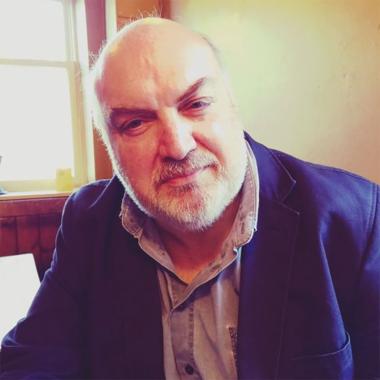
Keynote — 09:15–10:15
Political Communication and Democratic Ideals: The Precarious Role of the Citizen
Stephen Coleman
· University of Leeds
Most scholars agree that liberal democracies are facing a contemporary crisis. Much attention has been paid to the destabilisation of political institutions, threats to traditional journalism, new sources of authoritative public knowledge and the rise of populist politicians. In this lecture we shall ask what all of this means for norms and practices of democratic citizenship? Is it meaningful to speak of a civic culture, public sphere or cohesive body of citizens? Can the concept and activity of citizenship survive the deep fractures of our time?
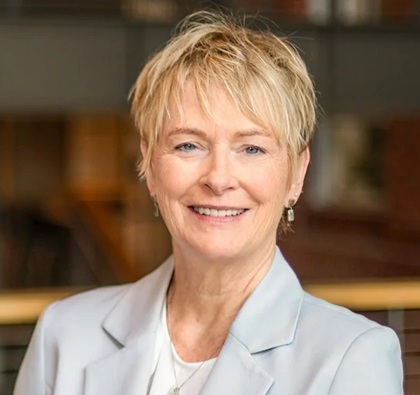
Masterclass — 11:30–13:00
What Has Political Communication Got to Do with Democracy?
Regina Lawrence
· University of Oregon
At a time when democracy is challenged around the world, the field of political communication—and the whole endeavor of academic research and publishing—is challenged as well. This presentation is designed to raise questions and provoke discussion about the relevance of our work as a field. How are we addressing democracy and threats to democracy in our research? In our training of graduate students? Are the incentives and constraints around academic publishing conducive to research that grapples cohesively with democratic decline?
Tuesday, 14 July
AI, algorithms, research methods and democratic citizenship
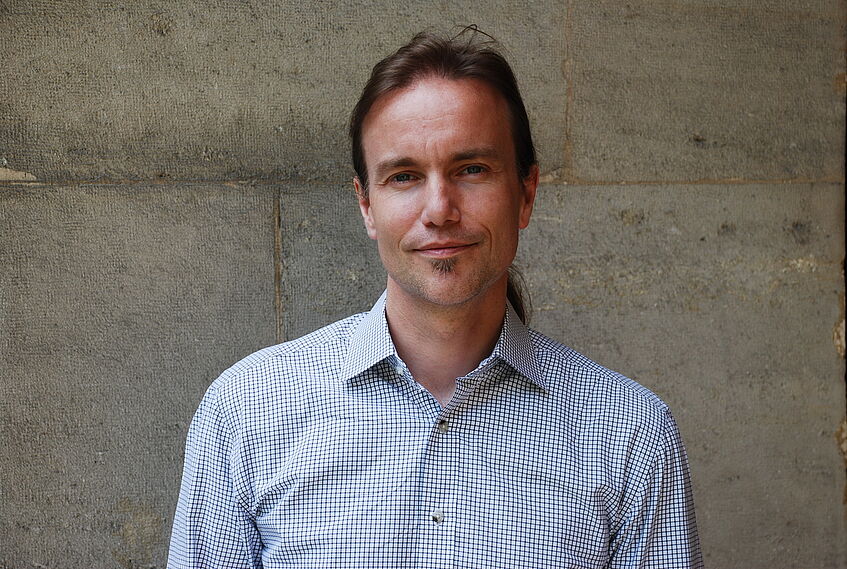
Masterclass — 08:30–10:00
How AI Is Transforming Research (Methods) in Political Communication
Jörg Matthes
· University of Vienna
Artificial intelligence is rapidly transforming political communication research, reshaping not only the political information environments scholars seek to understand but also the methods used to study them. This talk examines how generative and analytical AI systems are changing the entire research process, from theory development and literature synthesis to research design, data collection, content analysis, experimentation, and scientific writing. Drawing on examples from automated analysis of political content, AI-generated experimental stimuli, large-scale analysis of digital trace data, simulation-based research, and hyperrealistic synthetic political media, the presentation highlights both the opportunities and the challenges that AI creates for the field. Particular attention is paid to questions of validity and replicability. Rather than advocating either uncritical adoption or outright rejection, the talk argues for a human-centered approach that combines methodological rigor with epistemic responsibility.
Masterclass — 11:30–13:00
Algorithms, AI, and Power: Three Tensions for Democratic Citizenship
Sebastián Valenzuela
· Pontificia Universidad Católica de Chile
Social-science research on algorithms and AI has largely been descriptive. This talk reframes the question around power: what kind of power is organized through these technologies? Building on Klinger's distinction between power of, through, and over algorithms, it analyzes algorithmic power through three structural tensions. First, agency versus structure: user agency persists but is conditioned by platform architectures. Second, opacity versus knowledge: as systems operate as black boxes, the problem shifts toward epistemic delegation, examined through an emerging construct—Belief in AI Sufficiency—associated with lower political knowledge. Third, innovation versus democracy: AI is legitimized as innovation while its effects are political, shown through Brazil's failed 'Fake News Bill' (PL 2630). Together these tensions form a coherent configuration of power with direct implications for political communication research.
Wednesday, 15 July
AI, populism and democratic communication
Masterclass — 08:30–10:00
Does AI Undermine Democracy?
Claes de Vreese
· University of Amsterdam
This lecture dives into the current research and knowledge on the effects of AI on the information ecosystem and democracy. It unpacks the implications for media and journalism on the one hand and elections and democracy on the other. It reviews emerging regulatory frameworks and ends with a number of unanswered questions.
Masterclass — 11:30–13:00
Populist Communication and Democratic Ideals: New Directions in a Global Research Agenda
Lone Sorensen
· University of Leeds
This masterclass examines what the study of populist communication has taught us about democracy, political representation, and political communication, and considers where the field should go next. Tracing the evolution of populism research from early definitional debates to contemporary concerns about its democratic implications, the session reflects on the development of the populist communication approach and its contribution to understanding contemporary politics. Drawing on examples from across different political and media systems, it explores how populism intersects with democratic disaffection, polarisation, epistemic change, transnational political dynamics, and emerging forms of authoritarianism. The masterclass concludes by identifying major unresolved questions and emerging research agendas.
Thursday, 16 July
Misinformation, propaganda and public opinion
Masterclass — 08:30–10:00
Perceptions of Misinformation Exposure, Social Media, and AI: Mapping the Shifting Targets of Cynicism
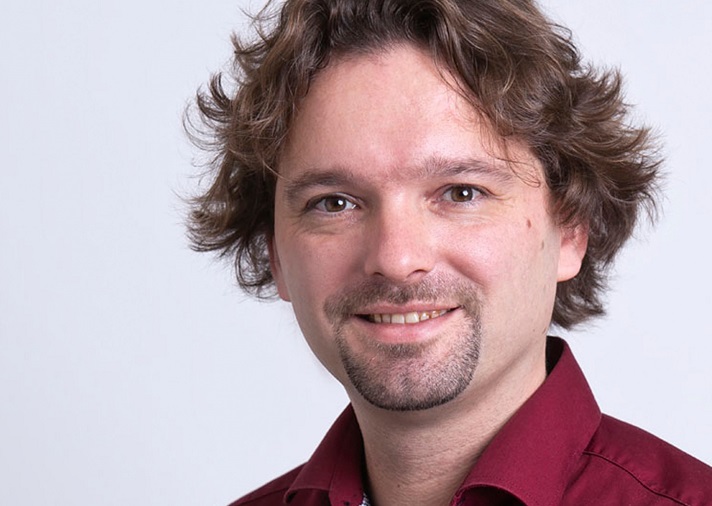
Dam Hee Kim
· Korea University
This masterclass talk demonstrates how perceptions of misinformation exposure can act as a catalyst for political cynicism, evolving from early social media landscapes into the current era of Generative AI. Charting a programmatic line of research, I will first share findings from a collaborative study, offering initial evidence that perceived exposure to misinformation initiates a path to political cynicism among American social media users. Based on a follow-up study, I will then discuss how cynicism toward politicians and the media expands to cynicism toward fellow citizens. Paradoxically, this path emerges most strongly among supposedly sophisticated citizens with a high need for cognition. Finally, in the Korean context, I will present preliminary insights into the ways GenAI complicates this epidemic by shifting the targets of cynicism.
Masterclass — 11:30–13:00
Propaganda and Public Opinion as a Participatory Communication Process
Christian Baden
· The Hebrew University of Jerusalem
Political communication on digital media is fundamentally participatory, ever engulfed in countless voices chiming in to register opinions, offer information, amplify or contest others' contributions. At the same time, digital public debates remain riddled with profound power asymmetries, distortions and exclusionary mechanisms. In this masterclass, I shift perspectives to examine how unequal communication power, selective mobilization, precarious interactions and a multitude of dynamic feedback processes contribute to the negotiation of public opinion climates. I then discuss how contemporary propaganda exploits these processes to colonize public debates, mobilizing social pressure to subvert pluralistic discourse and delegitimize dissent.
Friday, 17 July
Elections, polarization and democratic interventions
Masterclass — 08:30–10:00
Social Media in U.S. Elections
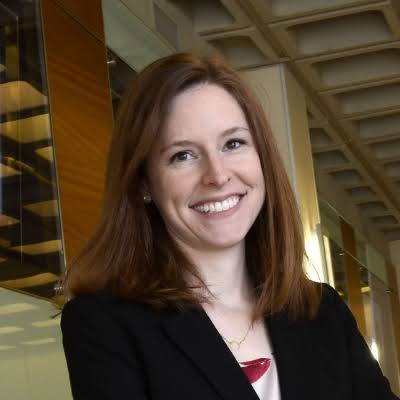
Talia Stroud
· University of Texas at Austin
This talk will be a high-level overview of research done as part of the 2020 U.S. Facebook and Instagram Election Study, including observational and experimental work published in 2023–2026 in a collaboration between U.S. academics and Meta. Observational work includes examinations of how people engage with political content on the platform. Experiments examine how algorithmic changes, deactivation from platforms, and changes to the ads seen affect political attitudes and behaviors. The talk will emphasize the four outcome variables: participation, (mis)information, polarization, and trust/legitimacy, paying particular attention to recently published results about the effects of political ads and deceptive online networks.
Masterclass — 11:30–13:00
Examining the Causes and Responses to Polarization: From Media Triggers to Democratic Interventions
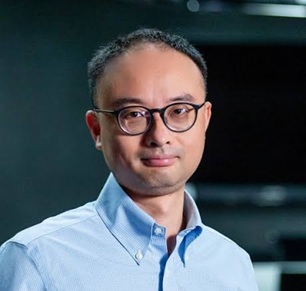
Chris Fei Shen
· City University of Hong Kong
Political polarization is rarely the result of a single, isolated variable; rather, it operates within a dynamic, multi-layered communication ecosystem. This talk synthesizes recent empirical research to trace how macro-level media inputs—specifically affective news tone and complex framing structures—interact with micro-level psychological traits and social media affordances to accelerate ideological division. Moving beyond diagnostic analysis, the talk explores evidence-based remediation strategies, evaluating the efficacy of structural deliberation, fact-checking, and the traditional 'news diversity' standard in mitigating polarization. The research, largely contextualized within Hong Kong's intense period of social disturbance between 2014 and 2020, has significant implications for countries around the globe.
No matching items